
There’s a moment many people don’t talk about. You’re in a store, a park, or just moving through your home and suddenly every step feels like something you have to plan. You’re not walking freely anymore. You’re negotiating balance, energy and fear of fatigue.
This is where a Rollator Walker with Seat quietly changes the story.
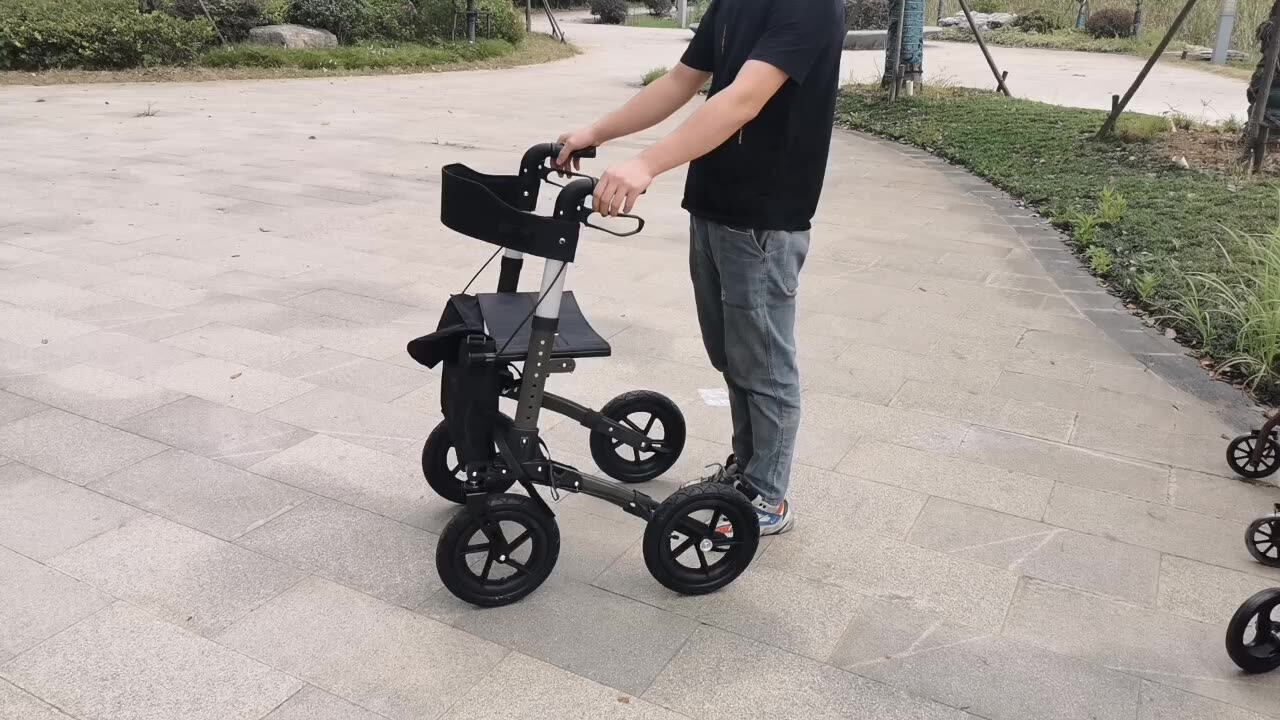
Unlike traditional walking aids, it doesn’t just “support movement”, it restores pauses, confidence, and independence. A Rollator Walker with Seat is a wheeled mobility aid designed with a built-in seat, hand brakes, and a lightweight frame to help users walk safely while having the ability to rest anytime. In simple terms, it is a walking support device that allows movement without exhaustion taking over.
For many users, especially older adults or individuals recovering from injury, this becomes more than equipment. It becomes freedom on demand.
Key Takeaways
- A Rollator Walker with Seat improves walking stability and reduces fatigue
- Built-in seating allows safe rest anywhere, anytime
- It supports independence for seniors and recovery patients
- Proper selection can significantly reduce fall risks
Understanding the Role of a Rollator Walker with Seat
A Rollator Walker with Seat is a mobility aid designed for people who need walking assistance but don’t want to stop moving entirely. It features wheels for smooth motion, ergonomic handles for grip, and a secure seat for resting breaks.
This device is commonly used as a mobility aid for seniors, individuals with balance challenges, or patients recovering from surgery or injury. It bridges the gap between complete independence and full assistance.
In everyday life, it becomes a trusted companion, whether you are walking through your home, visiting a clinic, or moving through outdoor spaces.
Why It Matters More Than You Think
The real value of a Rollator Walker with Seat benefits is not just physical but also psychological.
When people fear falling or fatigue, they often limit their movement. That reduced activity can lead to stiffness, weaker muscles, and less confidence. A rollator reverses that cycle by offering:
- Stable walking support with wheels
- Controlled braking for safety
- Rest opportunities through its built-in seat
- Confidence to move longer distances
For many users, it turns hesitation into action.
How to Use a Rollator Walker
Using a rollator isn’t complicated, but using it correctly makes all the difference in safety and comfort.
Check, Adjust, Move, Pause, Secure
- Check brakes before standing or sitting
- Adjust handle height to wrist level
- Move forward at a steady, natural pace
- Pause whenever fatigue appears and use the seat.
- Secure brakes before sitting or standing
This simple rhythm helps users stay safe while maintaining independence.
Common Myths About Rollators
Many people delay using a rollator because of misconceptions. Let’s clear a few:
Myth 1: It makes you dependent
In reality, it often increases independence by enabling safer movement.
Myth 2: It’s only for very old adults
Younger adults recovering from surgery or injury also benefit from it.
Myth 3: It’s difficult to use
Modern designs like the lightweight rollator walker with seat are easy to maneuver and fold.
Myth 4: It replaces walking ability
It actually supports walking ability by reducing strain and risk of falls.
Choosing the Right Rollator Walker
If you’re exploring options like a rollator walker buying guide, here’s what matters most:
- Weight capacity and frame strength
- Foldable design for transport
- Comfortable seat padding
- Reliable hand brakes
- Adjustable handle height
- Storage basket for daily essentials
A well-chosen foldable rollator walker with a seat becomes part of your daily routine and is not just a medical device.
Mobility Support Comparison Guide
| Feature | Standard Walker | Rollator Walker with Seat | Benefit |
| Mobility | Must be lifted | Wheels for smooth movement | Less effort required |
| Rest Option | None | Built-in seat | Immediate rest support |
| Safety | Basic balance aid | Brakes + stability frame | Reduced fall risk |
| Independence | Limited walking range | Extended mobility | Greater freedom |
Real-Life Scenario: A Small Change, Big Difference
Case Study: Margaret, 72, Florida
Margaret struggled with fatigue while shopping and often avoided going out alone. After switching to a Rollator Walker with Seat, she began taking short walks again. The ability to rest whenever needed made her feel in control instead of restricted.
She now uses her rollator daily for errands, social visits, and light exercise. For her, it wasn’t just a mobility device. It was a return to normal life.
In similar cases, even a Walker Mobility Aid in Fort Lauderdale has helped users regain confidence in daily movement without constant assistance.
Expert Insight
“Mobility aids should never limit life. They should expand it by restoring safe movement and confidence.”
Author: Dr. Elena Harper
Where It Helps Most in Daily Life
A Rollator Walker with Seat is especially useful in:
- Grocery shopping and errands
- Outdoor walks and parks
- Medical appointments
- Home mobility and household movement
- Recovery periods after surgery
It is a senior mobility safety equipment solution that adapts to real-life movement patterns.
Conclusion
The truth is simple. Mobility isn’t just about walking. It’s about feeling safe enough to keep going.
A Rollator Walker with Seat gives that safety back. It reduces strain, supports balance, and offers rest exactly when it’s needed. For seniors, recovery patients, or anyone facing mobility challenges, it can be the difference between staying home and staying active.
With the right choice, especially from trusted providers like Juliart Medical, LLC, mobility becomes less about limitation and more about living fully again.
Summary
A Rollator Walker with Seat is a wheeled mobility aid designed for walking support, balance stability, and built-in rest. It helps reduce fall risks, improves independence, and supports daily movement with comfort and safety. From adjustable frames to foldable designs, it is a practical solution for long-term mobility support.
FAQ
What is a Rollator Walker with Seat used for?
It is used to support walking, improve balance, and provide a built-in seat for resting during movement.
Who should use a rollator walker?
Seniors, post-surgery patients, or individuals with balance or fatigue issues benefit most from it.
What makes a good rollator walker?
Strong brakes, adjustable height, comfortable seating, and a lightweight foldable frame.
How is a rollator different from a walker?
A walker must be lifted while a rollator rolls on wheels and includes a seat for rest.
Can a rollator be used outdoors?
Yes, it is designed for both indoor and outdoor walking support with stable wheels and brakes.


