
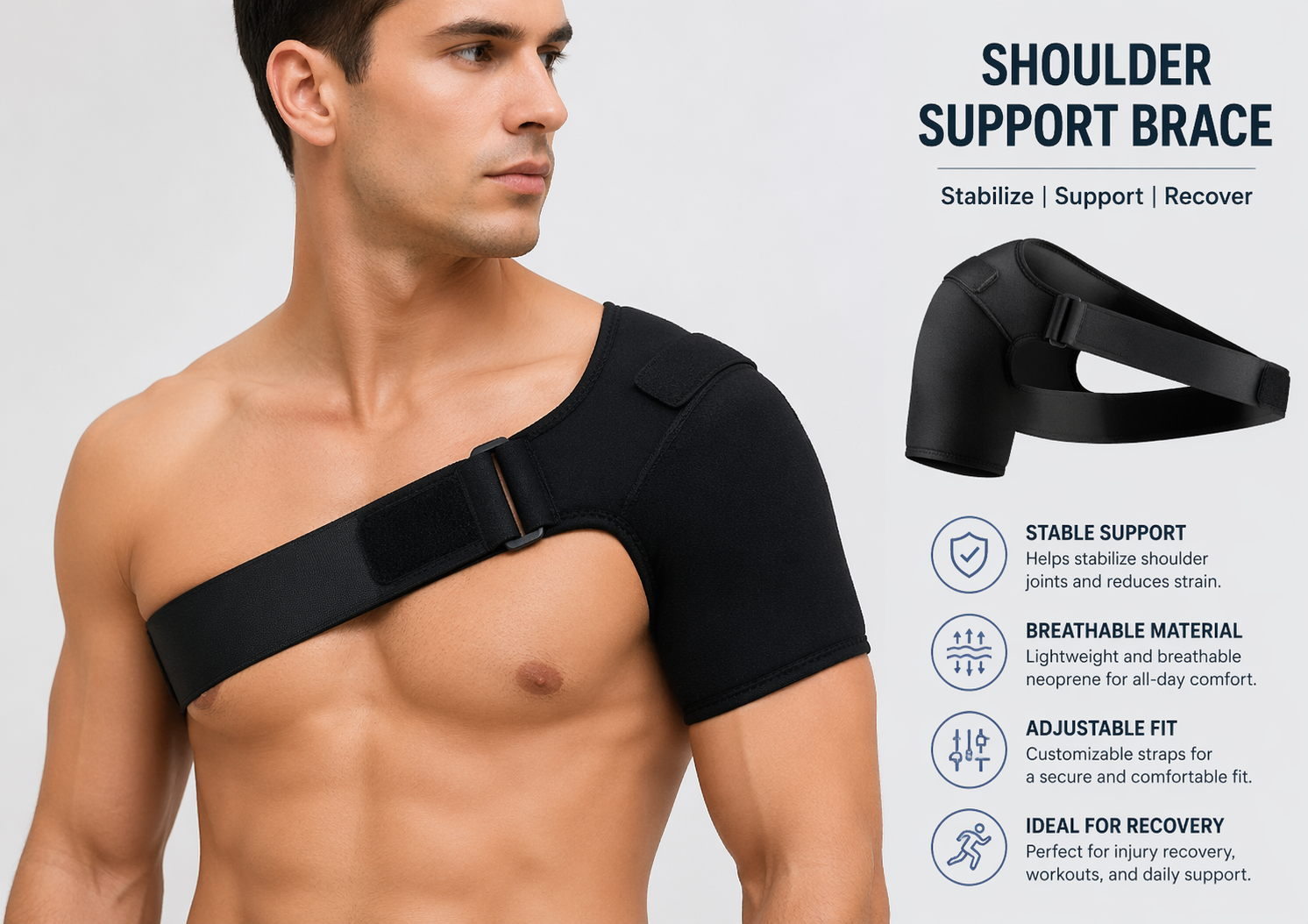
Shoulder pain can significantly impact daily life, whether it comes from an injury, chronic condition, or post-surgical recovery. A shoulder support brace is a medical device designed to provide stability, reduce discomfort, and promote healing for a wide range of shoulder conditions. This guide will explain what a shoulder support brace is, how it works, its benefits, and how to choose the right one.
Understanding Shoulder Braces and Supports
The shoulder is one of the most flexible and complex joints in the body, which also makes it prone to injuries like strains, dislocations, or tendonitis. Shoulder braces and supports are designed to stabilize this joint, providing both protection and support during daily activities or physical therapy. These devices can vary from simple compression sleeves to adjustable braces with straps or even immobilizers that restrict movement entirely.
By keeping the shoulder properly aligned, braces help prevent overextension or stress on muscles, ligaments, and tendons. They are often recommended by healthcare professionals for anyone recovering from an injury, surgery, or living with chronic pain.
How a Shoulder Support Brace Works
A shoulder support brace functions by combining three main mechanisms:
- Stability: The brace keeps the shoulder joint aligned, reducing unwanted movements that could aggravate an injury. This is particularly important for individuals with shoulder instability or recurrent dislocations.
- Compression: Most braces use materials like neoprene or elastic fabrics to apply gentle pressure. This shoulder compression brace design helps reduce swelling and improve blood circulation, which promotes faster healing.
- Pain Relief: By supporting injured tissues and minimizing strain, braces act as a non-invasive method to manage pain, particularly in cases like rotator cuff injuries or tendonitis.
In short, these devices help the shoulder heal while allowing limited movement for daily activities or light exercise.
Types of Shoulder Braces
Different conditions and levels of support require different types of braces. Understanding these can help you select the right one:
- Adjustable Shoulder Brace: These braces come with straps or Velcro fastenings, allowing users to customize the fit and level of compression. An adjustable shoulder brace is ideal for moderate injuries or daily wear.
- Rotator Cuff Shoulder Brace: Specifically designed for rotator cuff injuries, these braces provide targeted support to relieve pain and facilitate recovery. A rotator cuff shoulder brace is commonly recommended by sports medicine professionals.
- Shoulder Injury Support Brace: For post-surgery recovery or severe injuries, a shoulder injury support brace provides firm stabilization to prevent re-injury and promote proper healing.
- Shoulder Compression Brace: These are generally lightweight, offering mild support while increasing blood flow to the shoulder. They are perfect for mild pain relief or for use during physical activity.
Benefits of Wearing a Shoulder Support Brace
Using a shoulder support brace provides several benefits for both injury prevention and recovery:
- Reduces Pain and Discomfort: Supports the shoulder joint and injured tissues to minimize strain.
- Promotes Healing: Proper alignment and compression enhance recovery time after surgery or injury.
- Prevents Re-Injury: Stabilizes the joint, especially during physical activities or sports.
- Improves Mobility: Offers support without completely restricting movement, allowing for daily tasks or light exercise.
- Versatility: Many braces are adjustable and can be used for various shoulder conditions, including tendonitis, bursitis, arthritis, or rotator cuff injuries.
If you are in Florida, you can find a high-quality Shoulder Support Brace in Fort Lauderdale at Juliart Medical, LLC, where their team can guide you to the right solution for your needs.
How to Choose the Right Shoulder Support Brace
Selecting the right brace depends on the type of injury, level of support needed, and daily activity level:
- Assess Your Condition: Determine whether you need mild support, targeted pain relief, or full immobilization.
- Fit and Comfort: A properly fitted brace should be snug but not restrict circulation or cause discomfort.
- Adjustability: Braces with adjustable straps allow for personalized compression and flexibility.
- Material: Lightweight, breathable materials ensure comfort during extended wear.
- Professional Guidance: Consult with a healthcare provider for specific injuries or post-surgical recovery needs.
Tips for Using a Shoulder Support Brace Effectively
- Wear the brace as recommended by your healthcare provider.
- Combine use with physical therapy exercises if advised.
- Avoid over-tightening the brace, which may restrict circulation.
- Keep the brace clean and dry to maintain hygiene and durability.
- Monitor your shoulder for changes in pain or swelling and adjust the brace accordingly.
FAQs
1. How long should I wear a shoulder support brace?
The duration varies depending on the injury and advice from your healthcare provider. Mild pain may require a few hours a day, while post-surgery recovery could need extended daily wear.
2. Can a shoulder support brace cure rotator cuff injuries?
While it does not cure the injury, a rotator cuff shoulder brace supports recovery by stabilizing the joint and reducing strain, allowing the body to heal naturally.
3. Are shoulder braces suitable for athletes?
Yes. Many athletes use shoulder braces and supports to prevent injuries during sports or to support recovery from previous shoulder injuries.
4. Can I wear a shoulder support brace at work?
Absolutely. Lightweight and adjustable braces can be worn during daily activities, including office work or manual labor, providing support without restricting mobility.
5. How do I choose between a compression brace and an adjustable brace?
If you need mild support and improved circulation, a shoulder compression brace is ideal. For targeted stabilization and customizable support, an adjustable shoulder brace is recommended.
A shoulder support brace is a practical, non-invasive solution for managing shoulder pain, supporting recovery, and preventing re-injury. By understanding the different types, benefits, and usage tips, you can select the brace that fits your needs and enhances your shoulder health.
Whether for injury recovery, chronic pain, or athletic support, incorporating a shoulder support brace into your routine can improve mobility, reduce discomfort, and allow you to stay active with confidence.


